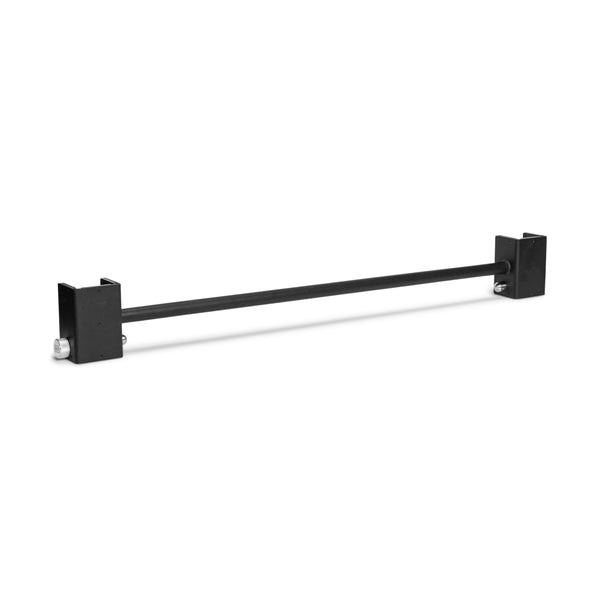
Building a home gym is one of the best investments you can make as a lifter. No commute, no waiting for the squat rack, no direct debit quietly bleeding you dry every month. Just head downstairs, stick your playlist on, and crack on with your session.
But it's dead easy to get wrong. Buy the wrong kit and you're stuck with an expensive clothes horse. Go too cheap and things fall apart within months. Go too dear and you've blown five years' worth of gym memberships before you've even done a set.
This guide covers the lot — from planning your space and setting a sensible budget to choosing the right home gym workout equipment for your training style and level.
Whether you're kitting out a freezing garage, converting a spare bedroom, or making do with a corner of your front room, we'll help you build a gym you'll actually use. It's written specifically for UK lifters, with UK dimensions, UK suppliers, and the UK-specific headaches that American guides completely ignore.
1. Is a Home Gym Actually Worth It?
Let's do the maths. A mid-range gym membership in the UK runs between £30 and £60 a month. Over five years, that's £1,800 to £3,600 — and you've got nothing to show for it at the end.
A decent home gym costs roughly £2,000 to £4,000 upfront. The equipment lasts a decade or more if you buy quality kit. That means most home gyms pay for themselves within two to four years, and everything after that is money in your pocket.
But the money's only part of it. The real value is what you get back:
- Time. No commute, no hanging about waiting for equipment. A session that takes 90 minutes at a commercial gym takes 45 at home.
- Consistency. Your gym's open 24/7. Early mornings, late nights, between meetings — training fits around your life instead of the other way round.
- Control. Your music, your temperature, your kit. Nobody curling in the squat rack. No rush-hour queues.
- Family. If you've got kids, a home gym means you can train during nap time, keep an ear out while they're playing, or get them started on lifting when they're old enough.
The main trade-off is the upfront cost and the discipline to actually use it. A commercial gym offers variety and a bit of social motivation. A home gym offers convenience and long-term value. For most people who train three or more times a week, the home gym wins hands down.
One more thing: most home gym guides online are written for an American audience, with American garage sizes, American ceiling heights, and American weather. If you've ever read a guide that reckons your garage is 6m × 7m with 3m ceilings, you know the frustration.
This guide is written for UK homes — terraced houses, single garages, 2.3m ceilings, damp winters, breeze block walls, and neighbours six inches away through a party wall. Every recommendation here accounts for the realities of building a home gym in Britain.
2. How Much Space Do You Need?
Less than you think. Here's a realistic breakdown of what different spaces can support:
Minimum Viable Gym: 2.4m × 3m (8ft × 10ft)
Enough for a compact squat stand or half rack, a flat bench, and a barbell. This is the ideal small home gym footprint — you'll be able to squat, bench, overhead press, and deadlift, the four movements that form the foundation of any strength programme. It's tight, but it works. Many successful home gyms for beginners start in exactly this space.
Comfortable Home Gym: 3m × 4m (10ft × 13ft)
This is the sweet spot. Room for a full-size power rack, an adjustable bench, plate storage, and space to move around without bumping into things. You can add a cable tower or functional trainer alongside the rack and still have floor space for dumbbell work and stretching.
Full Garage Gym: 4m × 6m (13ft × 20ft)
This is roughly the footprint of a UK double garage, or a generous single if yours is on the larger side. Room for a power rack with cable attachment, dedicated deadlift platform, dumbbell rack, cardio equipment, and storage for all of it. This is the dream setup for most serious lifters.
UK Reality Check: Typical Home Dimensions
Most UK single garages measure around 2.5m × 5m internally — that's closer to the "minimum viable" category than the "full gym" one. Ceiling height is typically 2.1-2.4m, which rules out many American-designed power racks without modification. A standard UK spare bedroom runs 2.7m × 3m, with ceilings of 2.4-2.6m in older properties and 2.3-2.4m in modern new-builds. These aren't deal-breakers — plenty of excellent gyms operate in these spaces — but they do mean you need to measure carefully and choose equipment designed for tighter dimensions.
3. Setting Your Budget
We've seen people build cracking gyms for under a grand, and we've seen people spend £10,000 and still not have what they need. Whether you're building a home gym on a budget or going the full whack, the trick isn't spending more — it's spending smart.
Here's a reality check based on three common budget tiers. These are based on UK pricing as of 2026 for mid-range quality equipment that will last.
🟢 Starter Gym — The Essentials
£800 – £1,500
What you get: a squat stand or compact rack, a flat or adjustable bench, an Olympic barbell, and a starter set of bumper plates (around 100-120kg total). This covers all the big compound lifts and is genuinely enough for most beginners and intermediate lifters to make serious progress for a year or more.
Best for: Beginners, people on a tight budget, small spaces, anyone who wants to start training now and upgrade later.
🟡 Well-Equipped Gym — The Sweet Spot
£2,000 – £4,000
What you get: a full-size power rack with safeties and pull-up bar, an adjustable bench, Olympic barbell, full plate set (150-200kg), a cable tower or pulley system, adjustable dumbbells, rubber flooring, and basic accessories (dip attachment, resistance bands, barbell collars). This is the setup that 90% of home gym owners will be happy with long-term.
Best for: Intermediate lifters, people who've outgrown a commercial gym, anyone building a gym to last 5-10+ years.
🔴 Complete Home Gym — No Compromises
£5,000 – £10,000+
What you get: everything in the mid-range tier plus a functional trainer or weight-stack cable machine, a full set of specialty bars (trap bar, safety squat bar, curl bar), a dedicated dumbbell rack with fixed or adjustable pairs through the full range, a GHD or reverse hyper, cardio equipment, a deadlift platform, and professional-grade flooring throughout. This rivals most commercial gym setups.
Best for: Serious lifters, competitive athletes, families who all train, anyone who wants to never need a gym membership again.
4. The Essential Home Gym Equipment List
If you're starting from scratch, these are the home gym essentials to prioritise — roughly in order of importance. Get these right and you'll have a training space that covers 80%+ of everything you need.
Power Rack (or Squat Stand)
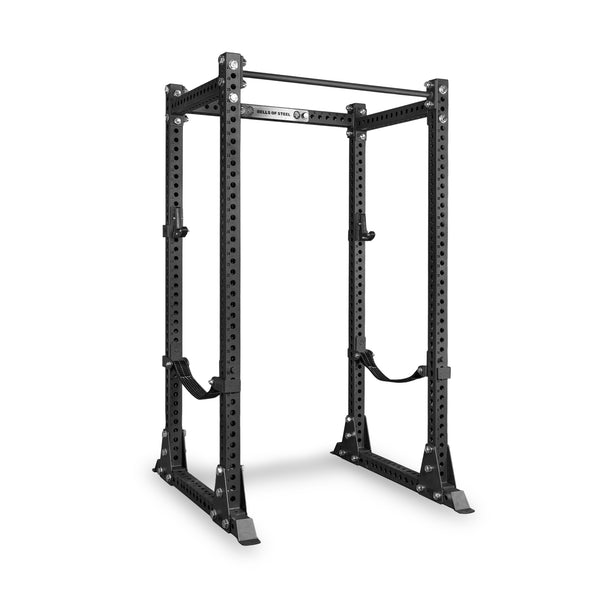
The centrepiece of any proper home gym. A power rack lets you squat, bench press, and overhead press safely with heavy weight — the safeties catch the bar if you fail a rep. It also gives you a pull-up bar and a framework to bolt on accessories like dip bars, cable pulleys, and landmine attachments.
A full four-post or six-post power rack is ideal if you have the space. If you're tight on room, a half rack or squat stand does the job in a smaller footprint, though you sacrifice some safety features and attachment options. Some people consider a multigym or multi gym machine instead — these all-in-one units combine a cable stack, press station, and lat pulldown in a single frame. They're fine for general fitness, but a rack-based gym set gives you more freedom to train with free weights and is far more expandable over time.
Look for racks with 3" × 3" (76mm) uprights and 5/8" (16mm) holes — this is the most common sizing standard, which means you can use attachments from multiple brands rather than being locked into one manufacturer's ecosystem. Weight capacity should be at least 450kg (1,000lb) for safety margin.
Adjustable Bench
A flat-to-incline adjustable bench opens up far more exercises than a flat bench alone. You'll use it for bench press, incline press, seated shoulder press, rows, step-ups, and dozens of dumbbell movements. Look for a bench that adjusts through at least four angles (flat, 30°, 45°, and upright) and is rated for at least 250-300kg combined load.
Weight matters here — if you're moving the bench in and out of a rack frequently, a lighter bench (under 30kg) is much more practical than a 50kg+ commercial one.
Olympic Barbell
Your barbell is arguably the most important single piece of equipment. It's the thing you'll touch every session, and quality matters.
For general home gym use, a 20kg Olympic barbell with a 28-29mm shaft diameter works for everything from squats and deadlifts to pressing and rows. If you mainly powerlift, look for a stiff power bar. If you do mixed training, a good multi-purpose bar is the way to go.
Don't skimp here. A £50 barbell off Facebook Marketplace will bend, lose its spin, and develop rust within months. A quality Olympic bar in the £150-300 range will last you decades. As they say on the forums: buy once, cry once.
Weight Plates
Bumper plates (rubber-coated) are the standard for home gyms because they protect your floor and can be dropped safely. Start with at least 100-120kg of plates — a pair each of 5kg, 10kg, 15kg, 20kg, and 25kg covers most needs for the first year.
If you're training in a bedroom or flat above neighbours, bumper plates are non-negotiable for noise and floor protection. Dead-bounce plates are even better — they absorb impact rather than bouncing, which is much safer in a confined space.
Adjustable Dumbbells or Kettlebells
Individual dumbbell pairs take up enormous space and cost a fortune at heavier weights. Adjustable dumbbells or adjustable kettlebells solve both problems — a single pair can replace 15 to 20 individual dumbbells, fitting in a fraction of the space.
Modern selector-style dumbbells change weight in seconds with a twist or slide mechanism, making them practical for supersets and drop sets. Similarly, adjustable competition kettlebells replace an entire rack of fixed kettlebells in one compact unit.
5. How to Choose a Power Rack
The rack is the biggest purchase you'll make, and it's worth getting right. Here's what to consider.
Rack Types
Squat stand (two independent uprights): The most compact option. Two uprights with J-hooks and optional spotter arms. Best for very small spaces or as a starter setup. Limited attachment options. Price range: £200-500.
Half rack: Two uprights connected by a top beam, often with a pull-up bar and plate storage built in. A good middle ground between a squat stand and a full rack — more stable, more attachment options, but takes up less depth than a full cage. Price range: £400-800.
Four-post power rack (full cage): The gold standard. Four uprights forming a cage with safety bars or straps on both sides. Maximum safety for heavy squatting and benching alone. The most attachment options — most cable towers, dip bars, and lat pulldowns are designed for four-post racks. Price range: £500-1,500.
Six-post power rack: A four-post rack with an additional two-post extension at the back. This gives you extra storage, a dedicated spot for a cable attachment without sacrificing interior rack space, and more structural rigidity. Best for lifters who want a complete all-in-one station. Price range: £800-2,000.
Key Features to Look For
- Upright size: 3" × 3" (76mm) with 5/8" holes is the most versatile standard. This gives you the widest range of compatible accessories across multiple brands.
- Weight capacity: At least 450kg (1,000lb). This isn't about lifting that much — it's about structural safety margin.
- Hole spacing: Westside hole spacing (25mm apart) in the bench press zone gives you finer J-hook adjustments for dialling in your bench position. Standard 50mm spacing is fine everywhere else.
- Safety mechanism: Pin-and-pipe safeties are the most common. Safety straps are quieter and gentler on barbells. Either works — just make sure your rack has them.
- Modular attachments: Can you add a cable pulley, dip bars, landmine, or lat pulldown later? The best racks grow with you.
- Footprint and height: Measure your space. Ceiling clearance above the rack needs to accommodate pull-ups and overhead pressing if that's your plan.
6. Beyond the Basics: Growing Your Gym
Once you have the essentials dialled in, it's time to think about home gym accessories and add-ons. Here's the order most people expand in — based on what adds the most training variety per pound spent.
Priority 1: Cable Pulley System
A cable tower or plate-loaded pulley that attaches to your rack is the single best upgrade after the core four (rack, bench, bar, plates). Cables let you do lat pulldowns, rows, tricep pushdowns, face pulls, cable curls, and dozens of other isolation movements that are difficult or impossible with just a barbell.

Weight-stack cable towers are more convenient (instant weight changes, great for drop sets). Plate-loaded pulleys are cheaper and use the plates you already own. Both work — choose based on your budget and how much you value training flow.
Priority 2: Specialty Bars
After your main Olympic barbell, a trap bar (hex bar) is the most useful addition. It lets you do trap bar deadlifts (easier on the lower back), farmer's carries, shrugs, and a different style of squat. An EZ curl bar is cheap and useful for arm work and front raises.
Further down the line, a safety squat bar is brilliant for quad-dominant squatting without shoulder strain, and a Swiss/football bar adds variety to pressing movements.
Priority 3: Dip Attachment or Standalone Dip Station
Dips are one of the best upper body exercises going. Most racks accept a bolt-on dip attachment for under £100. If your rack doesn't support one, a standalone dip station works and doubles as a place to do leg raises.
Priority 4: Cardio

Strength equipment comes first because it's harder to replicate outside a gym. Cardio, on the other hand, can be done for free — running, cycling, walking, skipping rope.
But if you want a dedicated piece of cardio equipment, an air bike or rower gives you the most versatile conditioning tool in the smallest footprint. Both support HIIT intervals, steady-state cardio, and active recovery.
Priority 5: Dedicated Dumbbell Setup
If your adjustable dumbbells start feeling limiting — either because you're outgrowing the weight range or because changing weight between sets slows your supersets — a set of fixed hex dumbbells or a second pair of adjustable dumbbells solves it. A dumbbell rack keeps things tidy and accessible.
7. Home Gym Flooring and Room Preparation
Proper home gym flooring protects three things: your subfloor, your equipment, and your joints. It also deadens noise — which matters enormously if you're training above a living space or have neighbours. Getting this right is especially important in UK properties where damp garages and old timber floors present specific challenges.
Rubber Gym Tiles
The standard choice for home gyms. Interlocking rubber tiles (15-20mm thick) cost roughly £15-30 per square metre and cover the essentials: impact absorption, stable footing, and floor protection. They're easy to install (no adhesive needed), easy to clean, and durable enough to handle dropped weights.
For a 3m × 4m gym, budget around £200-400 for decent rubber flooring. It's one of the best-value upgrades you can make.
A word on rubber smell. This comes up constantly in UK home gym forums: cheap rubber mats — especially horse stall mats repurposed as gym flooring — can produce a strong chemical odour that lingers for months in a small enclosed space. In a well-ventilated commercial gym it dissipates quickly; in a 3m × 4m spare bedroom with the window shut, it's genuinely unpleasant.
If smell is a concern (and it should be for indoor setups), look for gym-specific tiles marketed as "low odour" or "odourless," or spend more on EVA foam or virgin rubber tiles rather than recycled rubber. Airing mats outside for a week before installation also helps.
Deadlift Platforms
If you're doing heavy deadlifts, especially from the floor, consider a dedicated platform. A simple DIY platform using two layers of plywood with a rubber top layer costs under £100 in materials and significantly reduces the impact on your floor and foundations.
Concrete Floors (Garages)
Concrete is an excellent base for a home gym — it's strong, flat, and handles heavy loads. But bare concrete is brutal on dropped barbells, cold on bare feet, and in many UK garages the slab has no damp-proof membrane (DPM), meaning moisture wicks up from below. If your garage floor feels cold and damp to the touch or you notice white salt deposits (efflorescence) on the surface, moisture is migrating through the concrete.
The standard fix is rubber gym tiles (20mm+ for garages) laid over the concrete. For garages with damp issues, lay a polyethylene DPM sheet first, then 18mm plywood, then rubber tiles on top — this creates a thermal and moisture barrier that keeps mats dry and insulates against the cold slab. Budget around £15-30 per square metre for quality rubber tiles. For heavy deadlift and Olympic lifting areas, 30-40mm thick tiles provide better impact absorption and thermal insulation.
Many UK garage floors aren't perfectly level, either — decades of settling, poor original screeding, or patches from removed partition walls leave dips and ridges. Self-levelling compound (around £15-25 per 20kg bag from Screwfix or Wickes) solves minor unevenness before you lay mats. For deeper dips, a thin sand and cement screed may be needed first.
Timber Floors and Upper Storeys
Training on a timber-framed upper floor is absolutely possible, but you need to be sensible — especially in older UK properties. Victorian and Edwardian terraced houses typically have floor joists of 4"×2" or 6"×2" softwood, spaced about 40cm apart. Modern building standards specify a residential floor load of 1.5kN/m² (roughly 150kg per square metre as a distributed load), though older joists were often oversized and can handle more than their modern equivalents.
The key principle is spread the load. A 300kg loaded rack concentrated on four small feet is very different from 300kg distributed across a 2m×1.5m plywood base. Position your rack near or directly over a load-bearing wall where joists are supported at their strongest point. Use thick rubber matting over plywood to distribute weight across multiple joists. Bumper plates and dead-bounce plates are essential — no dropping weights from height on upper floors. And if you're in a Victorian or Edwardian terrace, check for the plaster ceiling below — deflection (sagging) under load can crack lath-and-plaster ceilings long before there's any structural concern.
8. Home Gym Design and Layout Tips
Good home gym design makes a small space feel spacious and a large space feel organised. A bad layout means tripping over plates, not being able to use your bench because it's jammed against the wall, and equipment you never touch because it's buried in the corner. Here are the home gym ideas that actually work in UK spaces.
The Layout Principles
- Rack first. Place your power rack first — everything else works around it. Position it so you have at least 1.2m of clear space behind it for loading plates and stepping out for squats. If possible, centre it so you can load both sides evenly.
- Bench path. Your bench needs to slide in and out of the rack easily. Leave enough depth inside the rack for the bench at full incline, plus room to get on and off.
- Cable clearance. If you're adding a cable tower or lat pulldown, account for the full arc of the cable at maximum extension. People forget this and end up smacking the ceiling with a lat pulldown.
- Storage on the walls. Plate trees, bar holders, and hook racks mounted on walls keep the floor clear and make the gym feel twice as big. Mount plate storage within arm's reach of the rack so loading and unloading is quick.
- Mirror placement. One wall with mirrors helps form-check without taking up floor space. The wall facing your rack (so you can watch your squat depth) is the most useful position.
Plan Your Layout Before You Buy
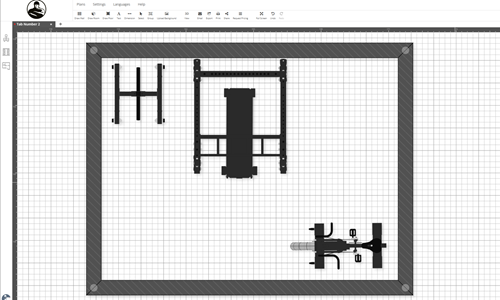
Guessing whether equipment fits is a recipe for expensive mistakes. Our free 3D Home Gym Planner lets you map your exact room dimensions, drag and drop racks, benches, cable towers, and machines into position, and see exactly how your layout will look from every angle — before you spend a penny.
Skip the guesswork. Map your room, place your equipment, and visualise your setup from every angle.
Watch the How-To Video Start Planning Your Gym
9. Garage Gym Considerations (UK-Specific)
The garage is the classic home gym location — but UK garages are a different beast entirely to what you see in American YouTube builds. Most UK single garages measure roughly 2.5m wide by 5m deep, with ceiling heights of 2.1-2.4m (7ft to just under 8ft). That's noticeably smaller and lower than what the lads across the pond are working with, and it shapes every decision you make.
The Ceiling Height Problem
This is the single biggest UK garage gym issue. A standard single garage ceiling of 2.1-2.3m means many full-size power racks simply won't fit — and even if the rack fits, you may not be able to do pull-ups or overhead pressing inside it. Before buying anything, measure your ceiling height at the lowest point (watch for RSJs, rafters, and any dropped sections near the garage door mechanism).
Look for racks with adjustable uprights or short-height versions designed for low ceilings. Some rack models come in specific UK-friendly heights (under 2.1m). Wall-mounted fold-back racks are another excellent option — they tend to be shorter, and because they mount to the wall rather than having a pull-up bar connecting the uprights, you can use the full ceiling height. For overhead pressing, you may need to press seated, use a shorter barbell, or simply press outside the rack with the garage door open — a common workaround in UK garage gyms.
The low ceiling also changes which exercises make sense. If standing overhead pressing and pull-ups aren't possible, lean into the equipment that thrives in low-ceiling spaces: a cable tower or pulley system gives you lat pulldowns (sitting, so ceiling height doesn't matter), tricep work, face pulls, and rows. A belt squat lets you squat heavy without needing overhead clearance for a barbell. Specialty bars like a Swiss bar or Arch Nemesis bar let you press with a neutral grip at a lower total height than a standard straight bar. These aren't compromises — they're genuinely excellent training tools that happen to solve the low-ceiling problem.
One more thing UK lifters discover too late: a standard 7ft (2.2m) Olympic barbell may not fit your space. In a 2.5m-wide single garage, a 2.2m bar leaves about 15cm of clearance on each side — technically it fits, but loading plates becomes awkward and you can't use the bar outside the rack without hitting the walls. A 6ft (1.8m) barbell or a specialist short bar solves this. Check your room width against your planned barbell length before buying.
Cold, Damp, and the British Winter
Let's be honest — training in a British garage from November to March is grim. Temperatures regularly drop to 2-5°C, and loads of UK garages are single-skin brick or concrete block with absolutely no insulation. The cold on its own is manageable (a decent warm-up, a few layers, and lifting gloves sort most of it), but the moisture is the real enemy.
Condensation forms when warm, humid air hits cold steel. You walk in after a day at work, your body heat and breath raise the temperature a few degrees, and water condenses directly onto your barbell, plates, and rack. This is what causes flash rust — and once it starts, it's a right pain to stay on top of. Opening the garage door in winter actually makes it worse by letting in more damp air. The real solution is temperature and humidity control:
- Insulate first. Battening the walls with timber and filling with mineral wool (Rockwool or Knauf), then covering with foil-backed plasterboard, is the most effective upgrade you can make. Insulated plasterboard (like Celotex-bonded boards) is a faster option. The garage door itself is the biggest weak point — insulated replacement doors are available, or you can add self-adhesive foam insulation panels to the inside of an existing door for £30-50.
- Keep a baseline temperature. You don't need to heat the garage to 20°C — that's madness. Keeping it at 8-10°C with a thermostat-controlled panel heater (£100-200) or a small oil-filled radiator prevents the big temperature swings that cause condensation. A 2kW fan heater running for 10 minutes before a session brings the air temperature up enough to crack on comfortably — and after five minutes of squats, trust us, you won't be cold.
- Dehumidifier (desiccant type). Standard compressor dehumidifiers freeze up below about 15°C and become useless. In a cold UK garage, you need a desiccant dehumidifier — these use a silica gel wheel to absorb moisture and work effectively down to near-freezing. Models from Meaco or EcoAir (£150-250) are popular choices. Keep the relative humidity below 75% and the condensation problem disappears.
- Post-session routine. Wipe barbells and exposed steel with a dry cloth after every session to remove sweat and moisture. Monthly, brush the knurling with a nylon brush and apply a light coat of 3-in-1 oil or camellia oil. This five-minute habit saves hundreds in replacement equipment.
- Mould prevention. Damp garages breed mould, especially on walls and ceiling corners. Before insulating, treat existing mould with a fungicidal wash, then paint with antimicrobial bathroom paint (brands like Dulux or Zinsser make mould-resistant formulations). It's a small step that prevents a recurring problem once you've sealed the space up.
UK Wall Types and Mounting Kit
Want to mount a pull-up bar, wall-mounted rack, plate storage, or a telly for watching footy between sets? The type of wall in your garage determines what's possible — and getting this wrong can be properly dangerous.
- Solid brick or dense concrete block: The best substrate for mounting heavy equipment. Use M10 or M12 rawl bolts (expansion anchors) drilled into the centre of the brick, not the mortar. Drill 80mm deep with a masonry bit. This will hold a wall-mounted pull-up bar with a 150kg+ person hanging from it.
- Breeze block (lightweight aggregate block): Common in many UK garages built from the 1960s onward. Standard breeze block is softer than brick and doesn't hold expansion bolts well. Use resin anchors (chemical fixings like Fischer FIS V or Sika AnchorFix) with threaded rod — these bond chemically to the block and provide solid pull-out resistance.
- Thermalite or aircrete blocks (new builds): These are very soft and porous. They will not reliably hold a pull-up bar or wall-mounted rack, no matter what fixings you use. The solution is to mount a thick plywood or OSB backing board across multiple blocks (spreading the load), secured with long resin anchors into the block, and then mount your equipment to the board.
- Plasterboard over brick (attached garages): Common where the garage shares a wall with the house. You cannot mount anything load-bearing to plasterboard alone. Cut back the plasterboard in the mounting area to expose the brick behind, then fix directly to the masonry. Alternatively, mount a timber batten through the plasterboard into the brick, then attach your equipment to the batten.
Lighting and Electrics
Most UK garage bulbs are a single dim pendant — terrible for training. LED batten lights or panels are cheap (£30-60 for a pair) and transform the space. Cool white (5000-6500K) is best for alertness and energy. If you're adding a heater, dehumidifier, and lighting, check your garage's electrical capacity — many UK garages run off a single spur from the house. A dedicated circuit (installed by a Part P registered electrician) costs £150-300 and avoids tripping breakers mid-set.
Security and Insurance
A garage full of gym kit is worth thousands, and unfortunately thieves know it. Upgrade your garage lock, stick a motion-sensor light on the front, and check your home insurance actually covers the contents. Most standard policies have a garage contents limit (often £3,000-5,000) — a properly kitted-out home gym blows straight past that. Ring your insurer to increase the limit or add specified items. A hasp and staple with a closed-shackle padlock is the bare minimum; a garage defender (£30-50 from Screwfix) bolted to the concrete in front of the door is a solid upgrade for the money.
Garden Gym Rooms: The Alternative
If your garage is too small, too damp, or you still need to actually park your car in it, a garden gym room is an increasingly popular option. Under permitted development rules, you can build an outbuilding in your rear garden without planning permission, provided it meets certain conditions: the total height must not exceed 2.5m if within 2m of a boundary (or up to 4m with a pitched roof if further away), it can't cover more than 50% of the garden area, and it must be "incidental" to the enjoyment of the house.
The 2.5m external height limit is the main constraint — after accounting for the floor build-up, insulation, and roof structure, you're typically left with an internal ceiling height of 2.2-2.3m. That's tight for a power rack with a pull-up bar, but workable with compact rack designs. Garden gyms from companies like MyOuthouse, Green Retreats, or custom builds run from £8,000-£20,000+ depending on size and spec, but they come fully insulated, dry, and with electrics — solving the cold, damp, and wiring issues that plague garage gyms.
Important: if your property is a listed building, in a conservation area, or a flat/maisonette, permitted development rights may not apply. Check with your local planning authority before committing.
10. Small Space, Spare Room, and Flat Gyms
No garage? Join the club — millions of UK homes, from Victorian terraces to modern new-build flats, haven't got one. The good news: a spare bedroom, box room, loft conversion, under-stairs nook, or even a decent-sized cupboard can work. Different types of UK housing come with different headaches, so here's how to deal with them.
Victorian and Edwardian Terraced Houses
Britain's most common housing stock — and actually not bad at all for home gyms if you know the quirks. Ground-floor rooms with solid floors (often a concrete slab or stone flags over earth) handle heavy kit without any bother. Upper floors have timber joists, typically 4"×2" or 6"×2" softwood spaced about 40cm apart. These are generally solid, but you need to spread weight sensibly: position your rack over or near a load-bearing wall, stick a plywood base down to distribute the load across multiple joists, and don't be dropping weights from height.
The typical Victorian terraced spare room is around 2.7m × 3m (9ft × 10ft) with 2.4-2.6m ceilings — tight but perfectly workable for a folding rack, bench, and barbell setup. Period features can actually help: those thick brick walls are spot-on for mounting pull-up bars, plate storage, and wall-mounted racks using masonry bolts. Just check whether the plaster is original lime or modern — lime plaster's softer and crumbles more easily around fixings.
Modern New-Build Houses and Flats

New-builds come with their own set of problems. The walls are typically lightweight block (thermalite or aircrete) with plasterboard on dabs — neither layer holds heavy fixings well on its own, which is a proper nuisance when you want to hang a pull-up bar. You'll need resin anchors into the block or a plywood backing board to mount anything load-bearing. Floors in new-build uppers are often engineered timber I-joists or metal web joists — built to modern loading standards (1.5kN/m²) but they flex noticeably under concentrated loads. Spreading weight is even more important here.
Flat dwellers have the added hassle of neighbours below. Sound travels through modern concrete slab floors less than you'd think, but through timber-framed floors it's absolutely brutal. Thick rubber matting, dead-bounce bumper plates, and controlling every eccentric are non-negotiable. Some flat leases also have clauses about floor loads or noise — worth checking before you shell out on heavy kit.
Folding and Compact Equipment
Wall-mounted folding racks fold flat against the wall when not in use, freeing up the entire floor. They're not as rigid as a full power rack, but modern ones handle 250-400kg comfortably and support pull-ups and basic attachments. For a room that doubles as a bedroom or office, this is the single best investment — your gym literally disappears when you're not using it.
Adjustable dumbbells and adjustable kettlebells are non-negotiable for small spaces — they replace an entire rack of fixed weights in less than a square metre of floor space.
Noise and Neighbours
This is the issue UK lifters underestimate most. The majority of UK housing is semi-detached or terraced — meaning shared walls, shared floors (in flats), and neighbours who can hear everything. Barbell clanking, plates being racked, treadmill vibration, even the rhythmic thump of deadlifts through a concrete slab — all of it travels. Noise complaints are a real risk, and being considerate isn't optional if you want to keep training long-term.
The practical solutions: dead-bounce bumper plates absorb impact instead of bouncing — they're noticeably quieter than standard rubber bumpers. Urethane plates are even quieter still (and don't have the rubber smell issue). Thick rubber matting (20mm minimum, ideally 30mm over a plywood layer) decouples the floor and deadens impact. Deadlift pads or crash pads placed where you lower the bar eliminate the worst of the noise. Controlled eccentrics (lowering weights slowly rather than dropping) make the single biggest difference. And no, you can't drop deadlifts from lockout in an upper-floor flat or a terraced house with shared walls. Lower them, every rep.
Timing matters too. Training at 6am in a semi-detached house with thin party walls will eventually cause friction. If early morning or late night sessions are non-negotiable, invest in the quietest equipment options and keep the heavy barbell work for sociable hours.
Multifunctional Equipment
Every piece of equipment in a small gym needs to earn its space. A rack with a built-in cable pulley does the work of two separate machines. An adjustable bench with a leg curl/extension attachment replaces a dedicated leg machine. Resistance bands stashed in a drawer add variable resistance to barbell lifts and provide an entire warm-up toolkit in zero floor space. A multigym or all-in-one gym set can be tempting for compact spaces, but check the footprint carefully — many are wider than they look in photos.
The 2.4m × 3m Minimal Gym
Here's a real setup that works in a 10ft × 8ft space: a compact squat stand positioned against a wall, a flat bench that slides underneath when not in use, a single Olympic barbell stored vertically in a wall mount, a pair of adjustable dumbbells on a low shelf, and plates stored on floor-level pegs on the wall behind the squat stand. Total floor area used during a session: barely more than a yoga mat. This is roughly the footprint of a UK single bedroom, so even a box room can become a fully functional training space.
11. Maintenance and Care
Home gym equipment lasts decades if you look after it — and develops rust, squeaks, and loose bolts in months if you don't. The good news: keeping on top of it takes about 15 minutes a month.
Monthly Maintenance Routine
- Barbells: Wipe down with a dry cloth after every session (removes chalk and sweat). Monthly, use a nylon brush to clean the knurling, then apply a thin coat of 3-in-1 oil or camellia oil along the shaft. Spin the sleeves to check for smooth rotation — if they're gritty, the bearings or bushings need cleaning.
- Rack: Check all bolts are tight (vibration from training loosens them gradually). Wipe down J-hooks and safeties. Inspect safety pins or straps for wear.
- Bench: Check the adjustment pins and pop-pins for smooth operation. Wipe the pad with a damp cloth and mild disinfectant. Inspect the upholstery for tears — duct tape is a temporary fix, a vinyl repair kit is a proper one.
- Cable systems: Check cables for fraying (replace immediately if you see any). Lubricate pulleys annually. Ensure guide rods on weight stacks are clean.
- Plates and dumbbells: Wipe with a damp cloth. Rubber-coated plates need almost no maintenance. Chrome or steel plates should get a light oil coating if stored in a damp environment.
- Flooring: Sweep or vacuum weekly. Mop with warm water and mild soap monthly. Rubber matting is nearly indestructible but chalk and sweat buildup gets grim if left.
12. Common Mistakes to Avoid
We've helped thousands of people build home gyms. These are the cock-ups we see time and again.
Buying everything in one go
The excitement's brilliant. Impulse-buying a full gym's worth of kit in a single order is not. Start with the essentials, train with them for a few months, and then you'll know exactly what you're missing — rather than guessing. Patience here saves you hundreds.
Cheaping out on the barbell
The rack can be budget-friendly. The bench can be basic. But the barbell is the one thing you touch every single session, and a dodgy one will actively make training worse. A barbell that bends, has no knurling left, or has sleeves that don't spin is dangerous at heavy weights and miserable at any weight. This is the one place to spend properly.
Not measuring the space
We can't bang on about this enough. People order a six-post rack without checking ceiling height and end up unable to use the pull-up bar. Or they buy a rack that's 1.2m deep and discover it doesn't fit with the bench inside. Measure everything — floor space, ceiling height, door width (good luck getting a six-post rack through a standard 762mm UK doorway without taking it apart), and clearance around the rack for loading plates.
Ignoring the floor
Dropping a loaded barbell onto bare concrete or a timber floor without protection is a fast track to damaged floors, damaged kit, and a very cross partner or neighbour. Budget for flooring from day one — it's not optional.
Getting sucked in by Instagram
Specialty machines, elaborate cable setups, and high-end accessories look mint in a reel. But if you can't squat, bench, deadlift, and row with progressive overload, none of that matters. Get the basics sorted first. The fancy stuff comes later.
Forgetting about ventilation
Training hard in an enclosed space generates serious heat and humidity, especially in the summer months. A simple fan makes training bearable. In a garage, crack the door open. In a bedroom, open the window. Poor ventilation leads to excessive sweating, faster equipment corrosion, and a room that honks like a school changing room.
13. Community Home Gym Inspiration
Nothing beats seeing real setups from real people. Every week, we feature standout home gyms from the Bells of Steel community — here are a few of our favourites to spark ideas for your own space.


Want your gym featured? Share your setup on Instagram, tag @bellsofsteel, and use the hashtag #BoSHomeGym for your chance to be our next Home Gym of the Week. Check out more setups in our latest roundup.
14. Frequently Asked Questions
How much does it cost to build a home gym in the UK?
A solid starter home gym costs between £800 and £1,500 for essentials (rack, bench, barbell, plates). A well-equipped mid-range setup runs £2,000 to £4,000, and a comprehensive gym with cable machines, specialty bars, and full dumbbell range can cost £5,000 to £10,000+. Most people recoup their investment within 12-18 months compared to commercial gym memberships.
How much space do I need for a home gym?
The minimum functional space for a power rack setup is about 2.4m × 3m (8ft × 10ft). A comfortable home gym with room for a rack, bench, and cable work needs around 3m × 4m (10ft × 13ft). Ceiling height should be at least 2.3m (7.5ft) for most racks, though some compact models work with lower ceilings.
What equipment should I buy first for a home gym?
Start with a power rack, adjustable bench, Olympic barbell, and a set of bumper plates. These four items let you perform over 80% of the most effective strength exercises. Add a cable attachment, adjustable dumbbells, and specialty bars over time as your budget allows.
Is a home gym worth it compared to a gym membership?
For most regular lifters, yes. A mid-range UK gym membership costs £30-60 per month (£360-720 per year). A well-equipped home gym costing £2,000-3,000 pays for itself in 3-5 years and lasts much longer. You also save commuting time, never wait for equipment, and can train on your own schedule.
Can I put a home gym in my garage or spare bedroom?
Both work well with the right preparation. Garages offer more space and durability but may need insulation and moisture control. Spare bedrooms are climate-controlled but need rubber flooring to protect floors and reduce noise. In either case, check your floor's weight capacity — a fully loaded rack with plates can weigh 300-500kg.
What flooring do I need for a home gym?
Rubber gym flooring tiles (15-20mm thick) are the standard choice. They protect your subfloor from dropped weights, reduce noise, provide stable footing, and are easy to clean. Budget around £15-30 per square metre. For deadlifts and Olympic lifting, consider a dedicated platform or thicker crash mats.
Do I need planning permission for a home gym?
Converting an existing room or garage: no. You don't need planning permission to use an existing space as a gym. However, if you make structural changes to a garage (new walls, insulation, windows, electrical circuits), you may need building regulations approval even though planning permission isn't required — these are separate processes. For a garden gym room/outbuilding, it usually falls under permitted development: max 2.5m height if within 2m of a boundary, single storey, max 50% of garden area. Exceptions: listed buildings, conservation areas, flats, and properties with planning conditions restricting outbuildings. Always check with your local planning authority if in doubt.
How do I stop my home gym equipment rusting in a UK garage?
Condensation — not rain — is the real enemy. When warm, humid air meets cold steel, moisture condenses directly onto your barbell. The fix is a three-part system: (1) insulate the garage to reduce temperature swings, (2) run a desiccant dehumidifier (not a compressor type — those freeze up in cold garages) to keep humidity below 75%, and (3) wipe barbells after every session and apply 3-in-1 oil or camellia oil monthly. A nylon brush through the knurling removes trapped chalk and sweat. Store barbells vertically or on a wall mount where air circulates. For long-term protection, cerakote or stainless steel barbells resist corrosion far better than bare steel or chrome finishes.
Can my floor support a home gym?
Ground floors and concrete slab garages can handle virtually any home gym setup. Upper floors are where it gets more nuanced. UK residential floors are designed for a distributed load of 1.5kN/m² (roughly 150kg per square metre). A fully loaded power rack with 200kg of plates, a barbell, and a lifter weighs around 400-500kg total — but spread across the rack's footprint (roughly 1.5 square metres) and a plywood base, this is within structural limits. Victorian and Edwardian joists (often 6"×2" softwood) are typically oversized by modern standards. The main risk is deflection (sagging) rather than collapse — position your rack near a load-bearing wall, spread loads across multiple joists with plywood, and avoid dropping heavy weights. If your floor visibly bounces when you walk, get a structural survey before loading it up.
What's the best home gym equipment for beginners?
A power rack, bench, barbell, and plates are the foundation. From there, a pair of adjustable dumbbells or an adjustable kettlebell adds enormous exercise variety in minimal space. Resistance bands are a cheap, versatile addition for warm-ups, face pulls, and banded exercises. Keep it simple, focus on progressive overload with the basics, and add equipment as you outgrow what you have.
What to Read Next
This guide gives you the complete picture. For detailed guides on specific equipment categories, check out these resources:
- How to Choose the Perfect Power Rack for Your Gym
- Best Space-Saving Equipment for a Home Gym
- How to Build a Versatile Training Space That Works for Everyone
- Flooring and Safety in a Home Gym
- Maintaining and Caring for Your Home Gym Equipment
- Get Creative with Rack Junctions: Smart Ways to Expand a Home Gym
- Home Gym Builder Tool — configure your perfect setup in minutes
Ready to get cracking? Browse the full range or use the Home Gym Builder to put together a setup that fits your space, budget, and how you like to train.