Good home gym flooring protects you, your equipment, and your home, while proper safety setup lets you train confidently without needing a spotter or crossing your fingers. You don’t need a commercial-grade build, but you do need flooring that matches your training style and safety basics you can trust—especially if you lift alone.
Think of flooring and safety as the foundation. Get them right, and everything else works better.
Why This Question Matters
People usually start thinking about flooring and safety after one of three things happens:
- They drop a weight and panic about the floor
- Something shifts, slides, or feels unstable mid-lift
- They realize they’re training alone and “hoping for the best”
There’s also a lot of mixed advice out there. Some people say horse stall mats solve everything. Others act like you need a commercial platform, rubber tiles, and crash pads just to deadlift.
The truth lives in the middle. Flooring and safety don’t need to be complicated—but they do need to be intentional.
Practical Breakdown: Flooring and Safety That Actually Matter
What Actually Matters
These are non-negotiables if you want to train consistently and confidently.
Impact protection
Your flooring should absorb enough force to protect your joints, your plates, and whatever’s underneath—concrete, subfloor, or shared living space.
Stability and traction
If your feet slip or your rack shifts, that’s a safety problem, not an inconvenience.
Noise control
Especially important in apartments, condos, or shared homes. Excess noise shortens the lifespan of your gym setup faster than almost anything else.
Safe failure options
If you’re lifting alone, you need safeties—spotter arms, pins, or platforms that let you bail without panic.
What’s Optional
Nice to have, not required.
- Full lifting platforms
- Extra-thick crash pads for light training
- Wall-to-wall flooring coverage
- Decorative finishes
You’re building a training space, not a showroom.
Common Flooring and Safety Mistakes
Assuming Any Rubber Is Good Rubber
Thin mats from big box stores often compress too much, slide around, or fall apart under real weight. They look fine—until they don’t.
Overbuilding for Your Actual Training
If you’re not dropping heavy barbells from overhead, you probably don’t need Olympic lifting platforms or competition-grade flooring.
Ignoring Transitions Between Surfaces
Uneven flooring edges, gaps, or shifting tiles are trip hazards waiting to happen.
Skipping Safety Gear to Save Money
Safeties aren’t an “upgrade.” They’re a baseline—especially for solo lifters.
How Space, Budget, and Goals Change the Answer
Apartment or condo training
Noise and vibration matter more than max impact resistance. Thicker rubber and controlled lifting styles win.
Garage gyms
Concrete needs protection, but space is usually less restrictive. Modular rubber flooring works well.
Basement gyms
Moisture resistance and stable subfloor coverage matter. Rubber tiles or rolls are usually safer than bare concrete.
Strength-focused training
Prioritize stability, safeties, and consistent footing.
General fitness or conditioning
Comfort, grip, and durability matter more than extreme thickness.
You don’t need “the best” flooring. You need the right flooring for how you train.
Equipment Recommendations (Value-First)
Rubber Flooring Tiles and Mats
Rubber flooring is the most versatile option for home gyms. It protects floors, reduces noise, improves traction, and holds up under heavy use.
Interlocking rubber tiles or dense rubber mats are especially useful because they stay put under load, absorb impact better than thin foam, and scale easily as your gym grows.
Bells of Steel rubber flooring options are designed specifically for home gym abuse—durable, dense, and made to handle real lifting without disintegrating. You can see them here.
Lifting Platforms (Partial or Full)
Platforms aren’t mandatory, but they’re helpful if you deadlift heavy or want consistent bar contact.
A platform protects your floor, creates a stable lifting surface, and reduces vibration through the structure. For many home gyms, a partial platform or reinforced deadlift area is more than enough.
Spotter Arms and Safety Pins
If you’re using a rack or squat stands, safeties are essential. They allow you to fail safely, train alone with confidence, and push progress without unnecessary risk.
Safety equipment takes up far less space than an injury.
Rack Stability Accessories
Depending on your setup, this might include weight storage pins for counterbalance, floor anchoring, or simply ensuring your rack sits on flat, level flooring.
A stable rack starts from the ground up.
Controlled Drop Accessories
If you train in shared spaces or want extra noise reduction, crash pads can help—but they’re not a substitute for good flooring. Think of them as a supplement, not the foundation.
Real-World Flooring and Safety Setups
Apartment or Condo Home Gym
Space is limited. Noise matters. Floors are not yours to destroy.
A smart setup looks like thick rubber flooring tiles, dense mats, or a compact platform paired with controlled lifts instead of dropping from overhead, an adjustable bench with dumbbells or kettlebells, and optional crash pads for deadlifts.
This setup protects your floors, keeps noise reasonable, and lets you train without anxiety.
Garage or Basement Home Gym
Concrete floors give you more flexibility—but still need protection.
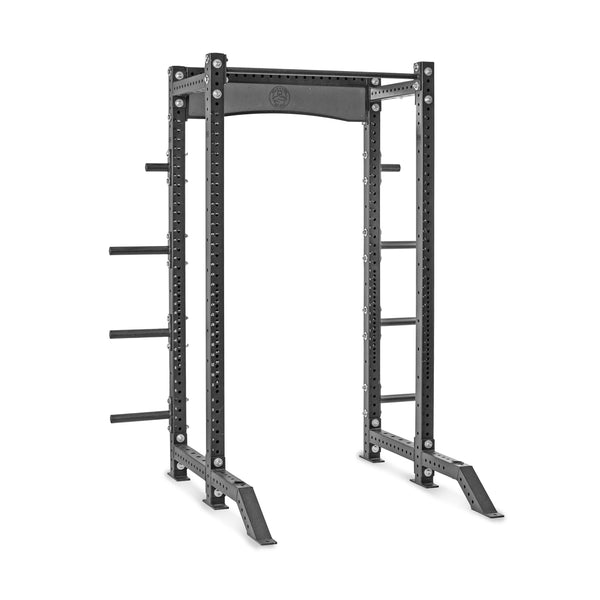
A practical setup includes rubber flooring tiles or mats covering the lifting area, a power rack with safeties, a stable bench, and an optional platform or reinforced deadlift zone.
You don’t need to cover the entire garage—just the areas where you actually train.
Flooring and Safety FAQs
Do I really need gym flooring?
Yes. Bare concrete or subflooring increases injury risk, damages equipment, and creates unnecessary noise. Flooring is foundational.
What if I have limited space?
Cover only the training area. A few well-placed mats beat wall-to-wall coverage you don’t need.
What’s the minimum flooring I can get away with?
Dense rubber mats under your rack or lifting zone. That’s the baseline.
Is thicker flooring always better?
Not necessarily. Too soft can feel unstable. Dense rubber with moderate thickness is usually the sweet spot.
Can I lift heavy without a platform?
Yes. Many home gyms do just fine with quality rubber flooring and controlled lifting.
Is safety gear more important than flooring?
They work together. Flooring protects impact and stability; safeties protect you when lifts go wrong.
Bottom Line
Flooring and safety aren’t the flashy parts of a home gym—but they’re the parts that keep everything else working. You don’t need to overbuild, overspend, or chase perfection. You just need flooring that protects your space and safety setups you can trust.
Start with the basics. Build as you go. A solid foundation—literally—makes every lift better.