If you’ve ever stared down a leg day and asked, “Will this actually build my glutes?”, you’re not alone. The pendulum squat has been popping up in home gym setups and strength training programs, but does it actually grow the glutes—or is it just another quad machine in fancy clothing?
Here’s the honest truth: yes, pendulum squats can build glutes, but they’re not necessarily the best or the only tool for the job. How much your glutes grow depends on how you use the movement, your foot placement, and how you balance it with other glute-focused lifts.
Let’s dig into the details so you know how to train smarter, not just harder.
What Muscles Do Pendulum Squats Work?
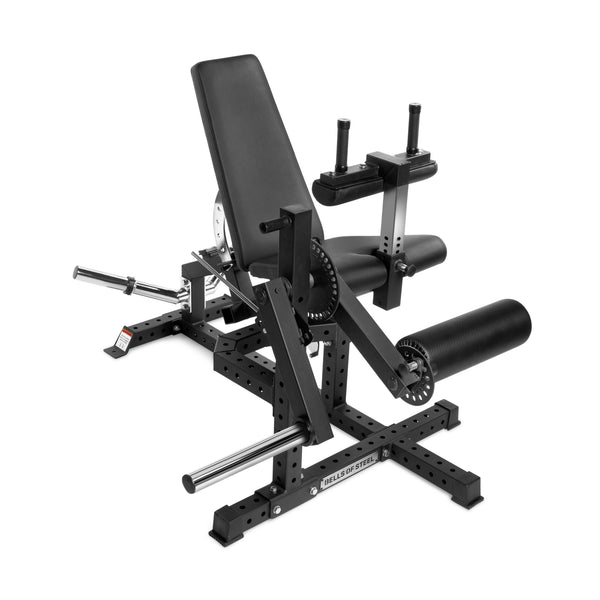
The pendulum squat is a machine-based squat variation where the lifter pushes a sled or lever system through a controlled, arcing motion. One great example is the Bells of Steel Pandemonium Squat, a multi-use machine that lets you squat, do calf work, and even press, all in one footprint.
Primary Muscle Targets
-
Quadriceps: The big winners. You’ll feel these first and feel them hard.
-
Glutes: Definitely involved, especially at deeper ranges and with certain foot placements.
-
Hamstrings: Secondary players, stabilizing and assisting especially at the bottom of the movement.
Secondary and Support Muscles
-
Adductors and abductors: Assist in hip stability.
-
Lower back and core: Engage to maintain posture, though less than barbell squats.
In short: pendulum squats are quad-heavy with glute activation, but how much your glutes grow depends on how you set up and train.
Does Pendulum Squat Grow Glutes?
Yes… but there’s nuance.
Pendulum squats can absolutely contribute to glute growth, especially if you perform them with glute-forward intent, meaning you drive through your heels, push your hips back slightly, and aim for depth that hits both quads and glutes. The fixed path and guided motion make it easier to maintain tension throughout the set without worrying about balance or bar control.
But:
-
Pendulum squats tend to emphasize quads first,
-
And the machine’s path doesn’t recruit glutes as deeply as some other squat variations.
That’s not a strike against them, it just means they’re best used as part of a balanced glute training program, not the sole glute-builder.
How to Get Glutes Working Harder on Pendulum Squats
You can tweak your technique to shift emphasis toward the glutes:
Foot Placement
-
Slightly wider stance + toes turned out: increases glute involvement.
-
Driving through the heels: keeps tension in the posterior chain rather than letting your quads dominate.
Depth
A deeper squat (with control) increases glute stretch and activation, just make sure your hips and knees are comfortable and stable.
Tempo and Control
-
Slow eccentrics (lowering phase): increases time under tension.
-
Explosive concentrics (pushing up): recruits more fast-twitch fibers, including in the glutes.
Other Squat Variations Ideal for Glute Growth
If your priority is glute size and power, consider adding these variations alongside pendulum squats:
Barbell Back Squat
A classic. Done with a slightly wider stance and pushing hips back, back squats can hit glutes, quads, and core in a compound-strength movement.
Front Squat
Great for quads, but with a more upright torso you can still train glute engagement, especially when paired with accessory work.
Hip-Dominant Variations
Although not squats, these movements are among the best for glutes:
-
Hip Thrusts: arguably the king of glute builders.
-
Romanian Deadlifts: hits hamstrings and glutes hard.
-
Glute Bridges: great for metabolic and hypertrophy focus.
Step-Backs and Lunges
These unilateral moves force each glute to work independently, correcting imbalances and building muscle symmetry.
What If You Don’t Have a Pendulum Machine?
No machine? No problem. You can still build glutes with:
-
Goblet squats
-
Dumbbell split squats
-
Band-resisted squats
-
Bulgarian split squats
Use tempo, control, and range of motion to keep tension high.
FAQ: Pendulum Squat & Glute Growth
Are pendulum squats better for glutes than barbell squats?
Not necessarily “better,” just different. Pendulum squats are great for controlled tension and depth with less technical demand. Barbell squats recruit glutes as part of a full-body strength pattern. Using both is smart.
Will pendulum squats make my quads big?
Yes, they are very effective for quad hypertrophy. That’s why they’re popular in leg specialization cycles.
Can I build a bigger butt without machines?
Absolutely. Bodyweight, dumbbells, resistance bands, and barbell variations all work if you use progressive overload and smart technique.
Do foot position changes really matter?
Yes. Wider stances and heel-driven pushes recruit more glute fibers. Small tweaks can shift the load significantly.
How often should I train glutes?
2–3 quality sessions per week works for most people, with one heavy/strength focus and one moderate/hypertrophy focus.
Conclusion: Use Pendulum Squats Strategically
So, does pendulum squat grow glutes?
Yes, but not as a standalone answer. It’s an excellent tool for quad-dominant strength with solid glute involvement, especially when you mind your foot placement and depth. But if your goal is maximum glute growth, pendulum squats work best alongside supplemental lifts like hip thrusts, Romanian deadlifts, and targeted unilateral work.
The pendulum squat earns its place in a well-rounded program, especially in a home gym where space and versatility matter. Machines like the Bells of Steel Pandemonium Squat let you train legs intensely and safely, expanding your options without requiring a bigger footprint.
Use it. Master it. But don’t be afraid to mix it up.